
100% Free · No Signup · Location-Accurate Panchang · 2026 & 2027
Free Vivah Muhurat & Wedding Date Finder
Every love story deserves a beginning written in the stars. Find the most auspicious wedding dates for 2026 & 2027 — calculated from the panchang for your location, in seconds.

Your Shubh Muhurat, Found in Seconds
We don’t hand you a generic list scraped from last year’s calendar. Wedd.ai reads the panchang for your location — the same tithi, nakshatra, yoga and karana a family pandit checks — and finds the genuinely auspicious windows. No guesswork, no date-of-birth, no login. Just your dates.
Search auspicious dates
Calendar search is unlimited. Tap a day for AI narrative guidance — up to 10 explanations per day per visitor.
Why Use Wedd.ai to Find Your Wedding Date?
Picking a date is the first big decision of the whole wedding — the venue, the guest list, the leave from work all wait on it. Here’s why couples and families trust Wedd.ai to get it right.
Calculated for Your Location, Not a Generic Calendar
A muhurat is tied to the sunrise and moon position where the wedding happens — so a date that is perfect in the north can start hours differently in the south. Most online lists ignore this. Wedd.ai computes the panchang for the coordinates you pick, so the verdicts you share with family are the ones you can actually stand under the mandap by.
It Reads the Whole Day, Not Just Sunrise
Most calendars check the sky once at sunrise and reject the whole day if it looks off. But the nakshatra and yoga change through the day. A morning that starts in an inauspicious star can turn beautifully auspicious by 9 AM and stay that way for hours. Wedd.ai scans the full day and surfaces those hidden windows — so you do not lose a perfect date to a lazy shortcut.
The Method Is Transparent
No black box. We show you why a date is shubh — the tithi, the nakshatra, the vara, and the reasons behind the verdict — in plain language you can explain to any elder who asks. Tap any day for an AI narrative that spells it out.
Free, Fast & Family-Friendly
No date-of-birth, no kundli upload, no account. Get your calendar, share the shortlist on WhatsApp, and let the family weigh in — all without paying a rupee.
How We Find Your Auspicious Dates
Behind the simple calendar is the same two-layer logic a careful pandit follows.
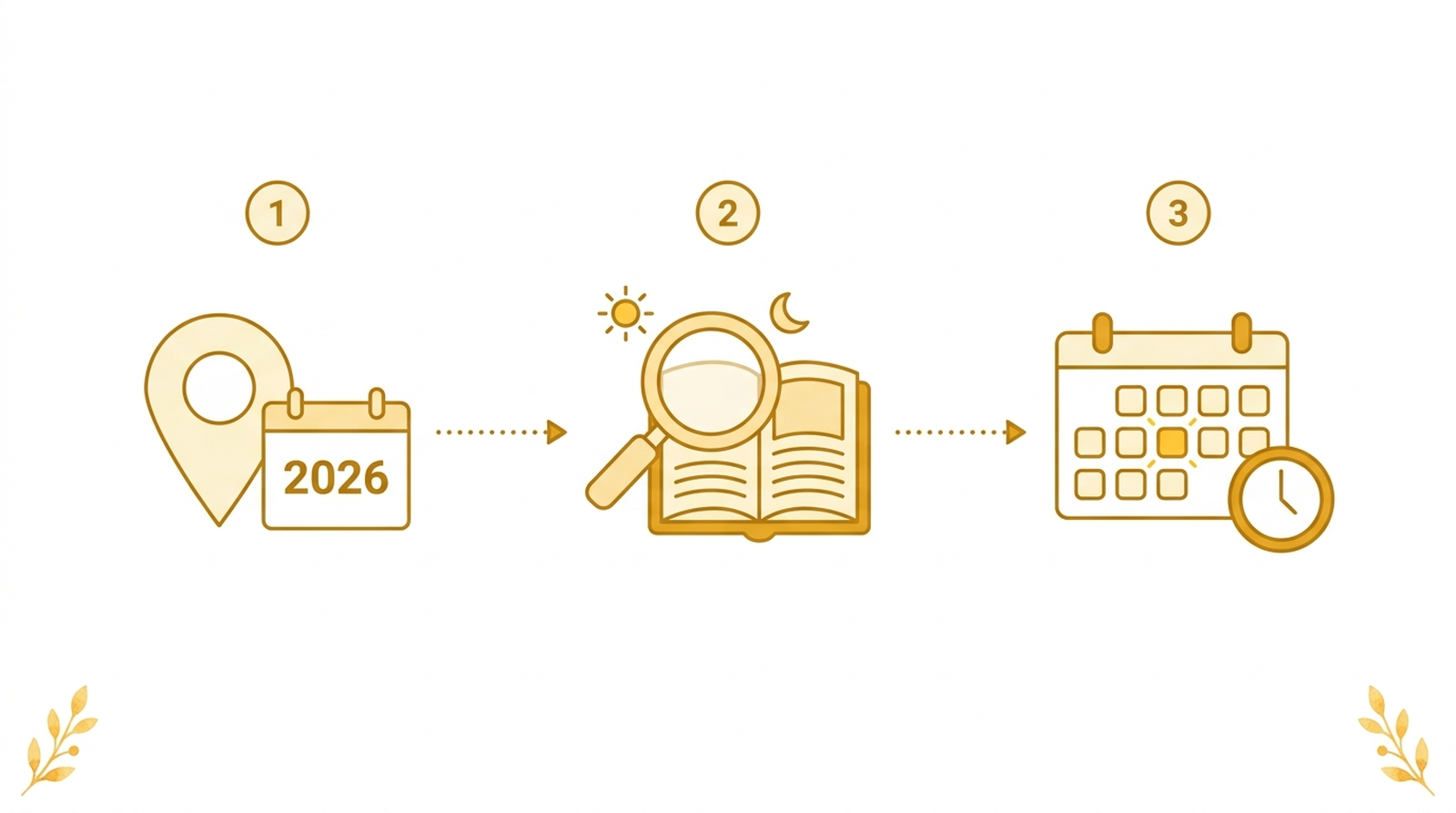
- 1
You tell us the location and window
Pick the state or UT where you will marry (we use its capital coordinates) and an inclusive date range of up to 60 days.
- 2
We rule out the clearly inauspicious periods first
Whole stretches of the year are traditionally off the table — the Kharmas months (Sun in Sagittarius or Pisces), Chaturmas (roughly July–November), any Adhika Maas (leap month), and the days when Venus or Jupiter are combust. Days in these periods are flagged accordingly.
- 3
We scan every surviving day, minute by minute
For the days that pass, we check the sky through the whole day for a pure nakshatra, a pure yoga, and a clean karana (no Vishti/Bhadra). The result is a colour-coded verdict for every day, with the reasons laid out.
Vivah Muhurat 2026 & 2027: Plan Around the Season
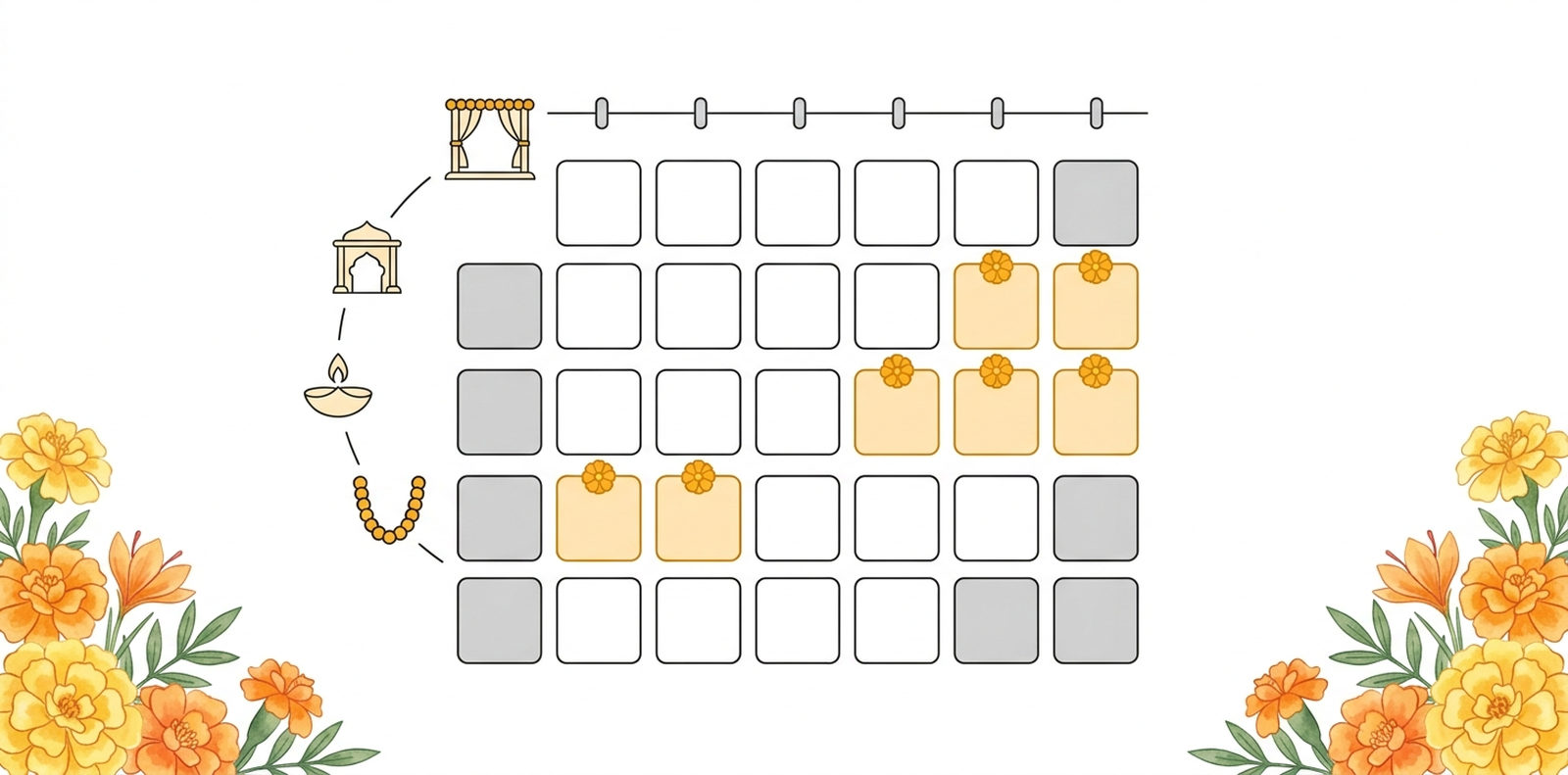
Indian wedding dates aren’t spread evenly — they cluster into a few blessed months and vanish during Chaturmas. Knowing the rhythm helps you plan venues and bookings before everyone else does.
- • The season reopens after Dev Uthani Ekadashi (mid-November), and the November–December stretch is the busiest wedding window of the year.
- • January and February carry a strong run of muhurats — cooler weather, big demand for venues.
- • Late April to early July brings the summer muhurats before Chaturmas begins.
- • Roughly July to mid-November is quiet — Chaturmas — with very few (if any) traditional wedding dates.
Planning a longer engagement? Read our full guide to vivah muhurat dates for 2026 & 2027 — season by season.
What Makes a Wedding Date Auspicious?
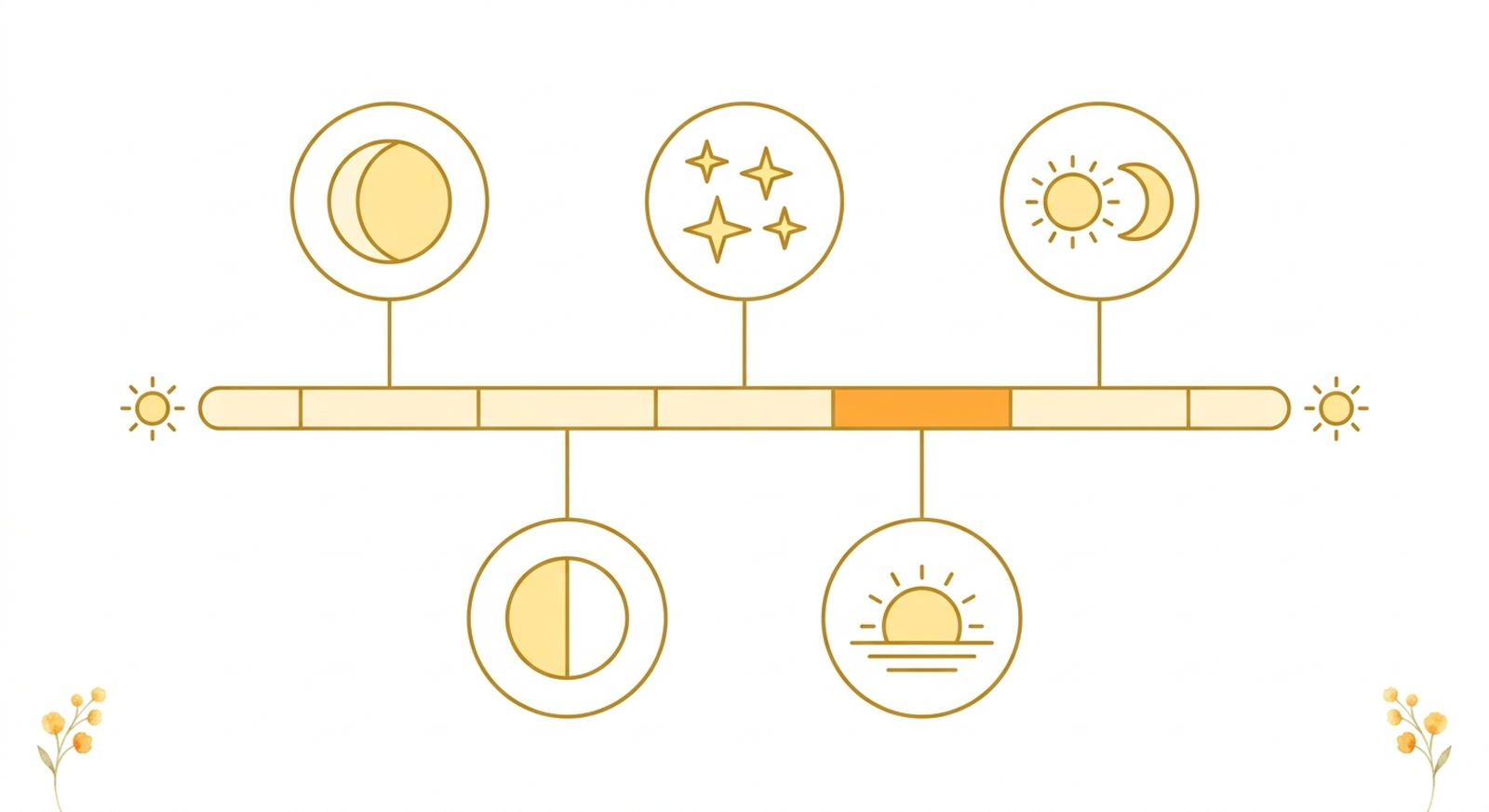
A muhurat isn’t superstition dressed up — it’s a reading of five moving parts of the day, the Panchang:
- Tithi
- The lunar day.
- Nakshatra
- The constellation the Moon sits in. For weddings, eleven nakshatras (Rohini, Mrigashira, Magha, Hasta, Swati, Anuradha, Moola and others) are considered auspicious.
- Yoga
- A Sun-and-Moon combination; a handful are avoided.
- Karana
- Half of a tithi; the Vishti (Bhadra) karana is skipped.
- Vara
- The weekday.
What about Abujh Muhurat? A few days a year (like Akshaya Tritiya, Basant Panchami, Devuthani Ekadashi) are considered so auspicious they need no muhurat calculation at all — the whole day is blessed.
Do’s & Don’ts of Picking Your Wedding Date
Do
- + Start with the panchang, then check your calendar — find the shubh dates first, then see which fit the family’s schedule.
- + Confirm the verdict is for your location — timings shift with place; use the ones calculated for where you will marry.
- + Book early in peak season — Nov–Feb dates and venues go fast.
- + Keep a backup date or two — flexibility saves you if a venue or key guest cannot make the first choice.
Don’t
- - Don’t trust a sunrise-only list — it can wrongly reject a perfectly auspicious day.
- - Don’t ignore Chaturmas — planning a July–October date usually means no traditional muhurat.
- - Don’t confuse date-matching tools with date-finding — kundli calculators answer compatibility, not “which dates are auspicious”.
- - Don’t leave it to the last minute — the best dates are also the busiest.
North Indian, South Indian & Regional Traditions
Muhurat traditions aren’t one-size-fits-all — the panchang is shared, but the customs around it differ. Whatever the tradition, the underlying panchang is the same sky, and Wedd.ai reads it for the location you choose.
North Indian
Hindi belt, Punjabi and Marwari families follow the Vikram Samvat calendar and the classic vivah muhurat windows; the season famously opens after Devuthani Ekadashi.
South Indian
Tamil, Telugu, Kannada and Malayali muhurthams often place extra weight on the nakshatra and the couple’s stars, and treat some months differently than in the north.
Bengali
Dates are drawn from the Bengali panjika, which publishes its own list of biyer tarikh (wedding dates) each year.
Our Advantage: A Unified Wedding Experience
Your wedding date is just the beginning. The moment it’s fixed, the real planning starts — and that’s where Wedd.ai carries you the rest of the way.
One Date, One Platform
Once you have locked your muhurat, keep going in the same place: build your guest list, send WhatsApp invites, track RSVPs, and share a photo gallery — no juggling five different apps.
Made for Indian Weddings
From the haldi to the vidaai, Wedd.ai is built around our weddings — multiple events, big families, last-minute cousins — not a Western template with Indian labels bolted on.
Share It the Way Families Actually Talk
Your shortlist of dates, your invites, your reminders — all shareable on WhatsApp, because that is where the family group chat already lives.
Let the Tech Handle the Chaos
Automated RSVP tracking, invite reminders, and guest logistics quietly run in the background — so you can enjoy the countdown instead of chasing headcounts.
Where Technology Meets Tradition
More features coming soon!! Hold onto your lehengas and sherwanis — we’re blending more AI into age-old traditions, one shubh feature at a time.
Frequently Asked Questions (FAQs)
What is a vivah muhurat?
A vivah muhurat is an astrologically auspicious date and time to get married, chosen by reading the panchang — the tithi, nakshatra, yoga, karana and weekday. Marrying within a shubh muhurat is believed to bless the couple with a happy, lasting union.
How do I find an auspicious wedding date with this tool?
Pick your wedding location (state or UT) and a date range of up to 60 days, then hit “Find wedding dates”. Wedd.ai reads the panchang for your location and returns a colour-coded calendar of shubh Vivah dates and Saya dates, each with plain-English reasons. Tap any day for an AI narrative explanation — free, no signup.
Is the Wedd.ai wedding date finder free?
Yes — completely free. No signup, no login, and no date-of-birth or kundli required. Calendar search is unlimited; AI day-by-day explanations are capped at a few per visitor per day.
Does the wedding date depend on my city or location?
Yes. A muhurat is tied to the sunrise and moon position at the place of marriage, so timings shift with location. That is why the tool asks you to choose a location — the verdicts you get are calculated for the coordinates of your selected state or UT.
What is a Saya date?
Saya is a general ceremony date that passes dedicated Saya rules — favourable solar month, non-combust Venus and Jupiter, Rohini nakshatra on Dwitiya, and no malefic yoga. When a day qualifies as Saya, it is labelled separately even if it would otherwise be auspicious or inauspicious for Vivah muhurat.
Do you use my date of birth or kundli?
No. This tool finds auspicious dates from the panchang for your location — it does not do kundli matching or horoscope compatibility. It answers “which dates are auspicious”, not “are we compatible”.
Why are there no wedding dates in some months?
Certain periods are traditionally excluded — Chaturmas (roughly July to mid-November, when Vishnu is said to rest), the Kharmas months, any leap (Adhika) month, and spells when Venus or Jupiter are combust. During these, few or no traditional wedding muhurats fall, so the finder will show fewer dates.
What is an abujh muhurat?
An abujh (or “self-evident”) muhurat is a day so auspicious it needs no calculation — the entire day is considered blessed for weddings. Days like Akshaya Tritiya and Basant Panchami are popular examples.
How accurate is this wedding date finder?
The calendar uses Swiss Ephemeris–based panchang calculations for your venue coordinates and timezone. Verdicts are deterministic. Narrative copy is AI-enriched with template fallbacks. Always confirm final dates with your family pandit.
Can I search more than two months at once?
Each search covers up to 60 days inclusive. For longer planning windows, run separate searches or shift your start date.
Begin Your Forever on the Right Date
It’s free, fast, and family-approved. Your perfect vivah muhurat is a few clicks away — no commitment, no card details, no date-of-birth needed.
No commitment · No card details needed